10 Warning Signs a Student Could Be Struggling Mentally
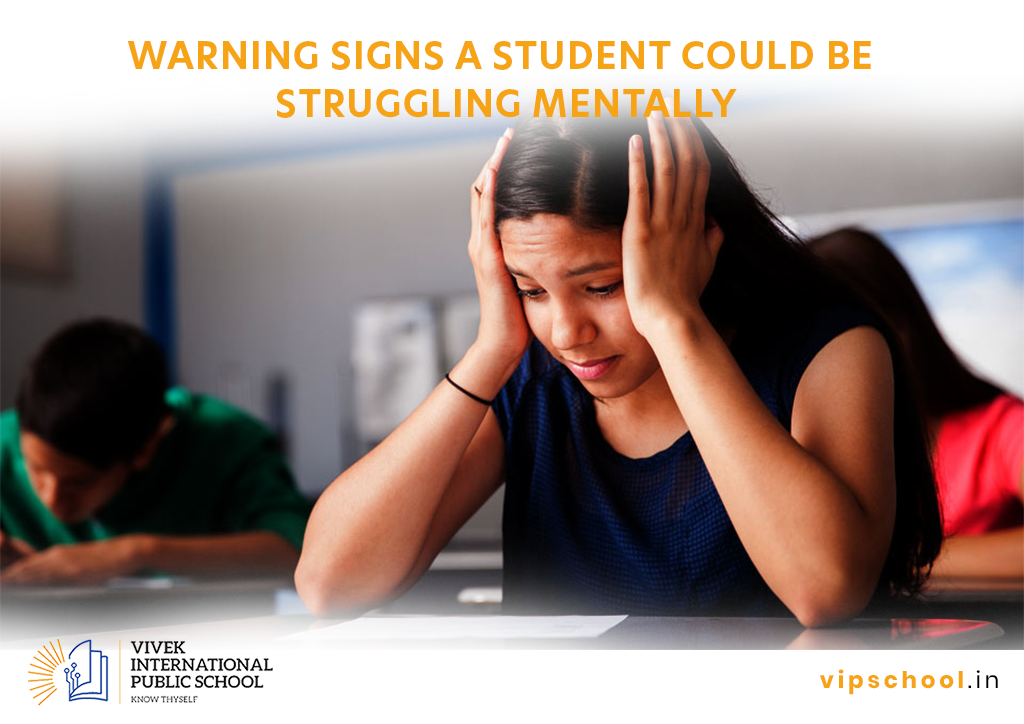 The life of a student may seem simple and stress-free, but in reality, it is not. Some students are constantly worried about their grades, classes, homework, and exams. Additionally, they feel pressure from parents and teachers to perform better academically.
It can feel overwhelming to balance schoolwork with personal life. And for some, this constant stress begins to affect their mental health. These struggles are not even visible sometimes, which makes it much harder for someone to help them. A student may act normal on the outside while quietly dealing with sadness, fear, or loneliness inside.
Because of this, many signs of poor mental health go unnoticed until the situation becomes very serious. That’s why it is important for teachers, parents, and even classmates to pay attention to changes in a student’s behaviour. In this blog by Vivek International Public School, Baddi, we will discuss 10 clear warning signs that may show a student is struggling mentally. (Also, don’t forget to check out our helpful resources at the end of this blog: How to Overcome Stage Anxiety? and Tips for Managing Exam Stress and Anxiety.)
The life of a student may seem simple and stress-free, but in reality, it is not. Some students are constantly worried about their grades, classes, homework, and exams. Additionally, they feel pressure from parents and teachers to perform better academically.
It can feel overwhelming to balance schoolwork with personal life. And for some, this constant stress begins to affect their mental health. These struggles are not even visible sometimes, which makes it much harder for someone to help them. A student may act normal on the outside while quietly dealing with sadness, fear, or loneliness inside.
Because of this, many signs of poor mental health go unnoticed until the situation becomes very serious. That’s why it is important for teachers, parents, and even classmates to pay attention to changes in a student’s behaviour. In this blog by Vivek International Public School, Baddi, we will discuss 10 clear warning signs that may show a student is struggling mentally. (Also, don’t forget to check out our helpful resources at the end of this blog: How to Overcome Stage Anxiety? and Tips for Managing Exam Stress and Anxiety.)
Sudden Drop in Grades
One of the biggest warning signs that a student might be having mental issues is a sharp decline in grades. A student who used to do well in class might all of a sudden begin to fail tests or miss assignments. It isn't always because they're lazy or uncaring.
Sometimes, it is because their head is too full of stress or sadness. When mental health is affected, concentration, memory, and motivation can be affected too. If you notice a student's performance declining, it might be time to check on them and see how they are actually feeling inside.
Changes in Sleep
Another important warning sign that a student is struggling mentally is a sudden change in sleeping habits. Some students may find it hard to fall asleep at night because their mind is filled with stress and worries. Others may start sleeping too much.
Both can be signs that something is wrong. Also, lack of sleep makes it hard for students to stay alert in class, finish homework, or keep their mood stable. Too much sleep, on the other hand, can leave them feeling tired and unmotivated.
Loss in Interest
A clear sign that a student might be struggling is when they lose interest in things they once enjoyed. A student who used to love playing sports, drawing, or spending time with friends may suddenly stop caring about those activities.
They might avoid hobbies, skip events, or simply sit quietly without showing excitement for anything. This can make the student feel even more isolated because the things that once brought them happiness no longer do.
Changes in Eating Habits
If there is a change in the eating habits of a student, it’s a clear warning sign that they are struggling mentally. Some students may lose their appetite and skip meals, while others may start eating much more than usual. These changes in eating habits are often induced by stress, anxiety, and sadness.
Skipping meals can make a student weak, tired, and unable to focus in class. On the other hand, overeating can lead to health issues and feelings of guilt or shame. So, if you see a sudden change in the eating habits of a student, it may be a sign they are dealing with mental health challenges.
Always Feeling Sad or Worried
Feeling sad or nervous once in a while is normal for students. But if a student is always sad or worried, it could be a sign of deeper mental health struggles. They may look upset without any clear reason, or constantly talk about being stressed.
Over time, they may find it hard to enjoy school, spend time with friends, or even take care of themselves. This feeling of constant sadness or worry must be perceived as a bad mood, but a strong signal that the student may need extra support and understanding.
Getting Angry Easily
When a student starts getting angry or irritated more often than usual, it is a warning sign that they are struggling mentally. Small things, like a comment from a friend or a simple mistake in class, may suddenly make them upset. They may shout, argue, or walk away in frustration.
It is because when mental health struggles build up, emotions can become harder to control. Their bodies try to release that pressure through anger, and the student might not be able to understand why they feel that way. So, if normally calm students start getting angrier more often, never ignore it, understand them and provide support if needed.
Staying Away from People
A student who suddenly starts to avoid friends, family or classmates may be struggling with their mental health. They might skip social activities, sit alone at lunch, or stop joining group projects. This is often a sign that they are feeling sad, anxious, or overwhelmed and don’t know how to cope.
Isolation can make mental health problems worse because the student misses out on support and connection. Even friends and family may notice that the student no longer talks as much or seems distant, even when they are around others. Such a behaviour change should never be ignored; instead, it must be taken seriously.
Talking About Being Worthless
Sometimes, a student may express that they feel worthless or like they do not matter. They might start saying things like “nobody cares about me” or “I am not good enough.” These statements are serious and should never be ignored
Feeling worthless is a strong sign that a student may be struggling with sadness, low self-esteem, or other mental health issues. And when a student believes they are worthless, even small acts of care can help them start feeling valued and understood again.
Hurting Themselves
When a student starts to harm themselves, it’s a sign that they have been struggling with mental health issues for a long time. They might cut, scratch, or hurt their body in other ways. And to hide the injuries, they always wear long sleeves or make excuses that do not even feel real.
Any sign of self-harm should be taken very seriously, as it means the student is in deep distress and needs immediate support and care. This is not something to ignore or hope will get better with time. If you see or suspect self-harm, act quickly to ensure the student’s safety.
Talks About Death or Suicide
The most serious warning signs of all are when a student starts talking about death or suicide. They may speak about wanting to die, not wanting to live anymore, or feeling like life has no purpose. Even if they say it jokingly or only once, it should never be ignored.
Any mention of death or suicide means the student needs immediate attention and support from professionals. Talking about suicide is not just a phase or a way to get attention, but it is a sign that the student may be thinking about harming themselves and needs urgent help.
Conclusion
Mental health is just as important as physical health. But in schools, at home, or even in college, mental health is not given priority. The signs we have discussed above, including a sudden drop in grades, changes in sleep or eating habits, loss of interest, constant sadness or worry, getting angry easily, etc., are all signals that a student may be struggling quietly.
It is important that we notice these warning signs early and offer care and support to those affected. Teachers, parents, and friends can make a real difference in a student’s life by providing them with the necessary support. For more information on students’ health, education, and career, stay tuned to the top CBSE schools in Baddi, Vivek International Public School, Baddi, Himachal Pradesh.