
News & Events
After-School Activities That Aren’t Homework
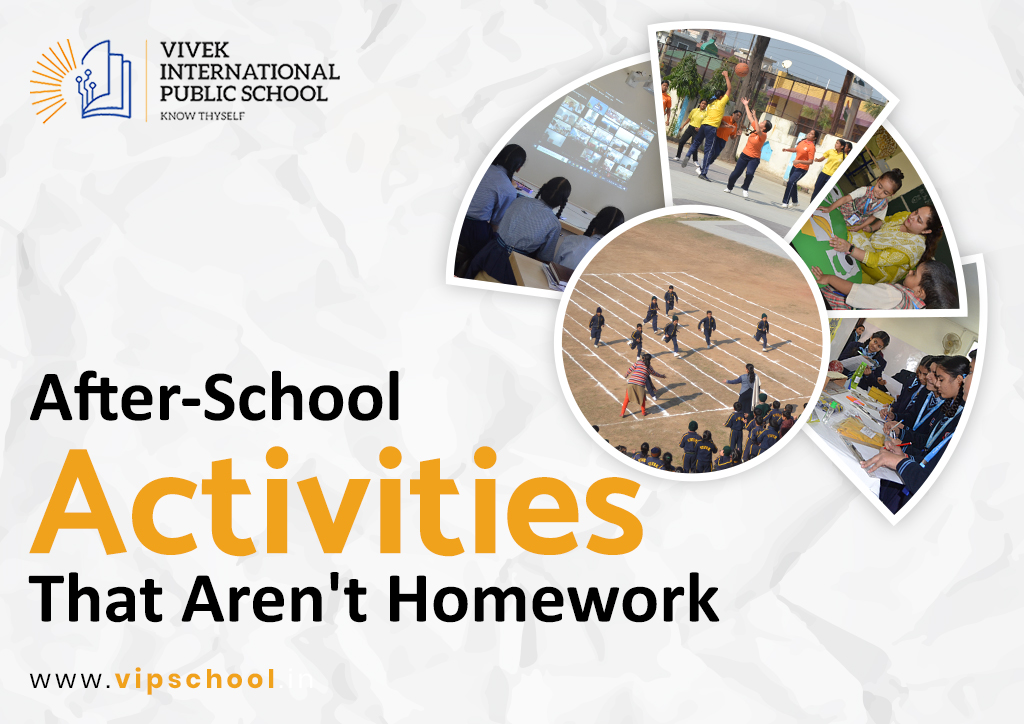
Nowadays, children feel more stressed than adults. With school, homework, tuition, and constant pressure to perform, their day leaves little room for relaxation, joy, or spending time with their family. After-school hours often turn into more study time or, worse, endless screen time that doesn't help them grow and messes with their brain.
But these hours can be used differently and better. Children need space to breathe, explore, and develop real-life skills outside textbooks. The right after-school activities can reduce stress, boost creativity, and build confidence, all without adding pressure to their little and creative brains.
In this blog of Vivek International Public School, Baddi, we will look at some of the smart and meaningful after-school activities that don't feel like homework, but still help your children learn, grow, and enjoy their childhood.
#1. Team Sports
You can encourage your children to play team sports after school. Team sports are not just for fun, but they are also very good for a child's overall growth. Team sports help children stay physically fit and active. Running, jumping, and playing in teams improve strength, stamina, and coordination.
Team games also teach students discipline, teamwork, and patience. While playing team games, children learn how to follow rules, listen to others, and respect their coach and teammates. They also learn how to handle winning and losing, which are both important lessons in life.
#2. Music Lessons
Music is the best way to express yourself. And children can master it more quickly than adults. You can encourage your children to learn to play an instrument like the keyboard, tabla, or guitar, or take singing classes. With music, children can improve memory, focus, and listening skills. So, encourage your children to learn music and ensure their overall growth.
#3. Art & Craft Projects
Children love to create things with their hands, and when you introduce art and craft activities to them, they won't stop doing it. Some of the best art and craft activities include drawing, painting, paper folding, and making DIY items that help them express their imagination. These projects improve fine motor skills and hand-eye coordination, which are important for overall development.
#4. Cooking or Baking
Cooking is a life skill and everyone should master it and your children are not an exception. So, bring them into the kitchen and let them do small tasks. Simple tasks like measuring ingredients, mixing, or helping with lunch boxes make them feel responsible. Cooking also teaches basic maths, reading, and time management. Apart from learning skills, children enjoy the experience of creating something they can eat.
#5. Reading
You might be surprised that we are talking about reading while discussing activities that aren't homework, but it is not the one you are thinking about. We want your children to read for fun, which is very different from reading for school. When children read storybooks, comics, or books about topics they enjoy, they begin to love reading. This habit also helps students perform better in studies over time. They learn to think creatively and understand different ideas.
Most students consider reading books a boring activity. But in actuality, it is one of the most important, interesting, and exciting things you can do in your life. Reading helps you build a stronger vocabulary that comes in handy while talking in public, answering questions, or writing essays. It also helps enhance concentration and focus, strengthen critical thinking and comprehension, and encourages imagination and creativity.
#6. Volunteering
By helping others, your children can learn values that can't be learned from textbooks. Simple acts like helping a neighbour, feeding stray animals, or supporting a local cause teach kindness, responsibility, and empathy. Children learn that giving time and care is just as important as receiving.
Volunteering also helps children see the world beyond their own needs and become more aware of others. These small experiences make them thoughtful and responsible adults. So, if you want your children to be responsible, don't let them stick to screens. Encourage them to volunteer whenever possible!
#7. Gardening
Gardening is the best way to teach your children about nature. When they plant seeds, water plants, and watch them grow, they learn about responsibility and patience. With gardening, they also understand how food is grown and the importance of taking care of the nature around them.
Also, spending time in the garden gives children fresh air and a break from indoor life. While gardening, they dig, plant, and observe bugs or birds, which makes them more curious and connected to the natural world. It is a simple activity with long-term benefits for both mind and body. So, when are you taking your children to the garden?
On the Final Note
Children nowadays spend most of their time doing their homework, and the rest of the time, they are glued to digital screens. While it may not seem like a big problem, it can affect the mental, physical, and emotional well-being of your children.
To ensure the overall growth of your children, encourage them to play team games, do gardening, read for fun, learn cooking, or whatever they enjoy doing. Some of the best activities you can consider for your children that help improve their lives are mentioned above in this blog.
For more information on supporting the growth of your children and making them responsible adults, stay tuned to VIPS, Baddi.
