Cyber Safety for Students: Essential Online Safety Rules
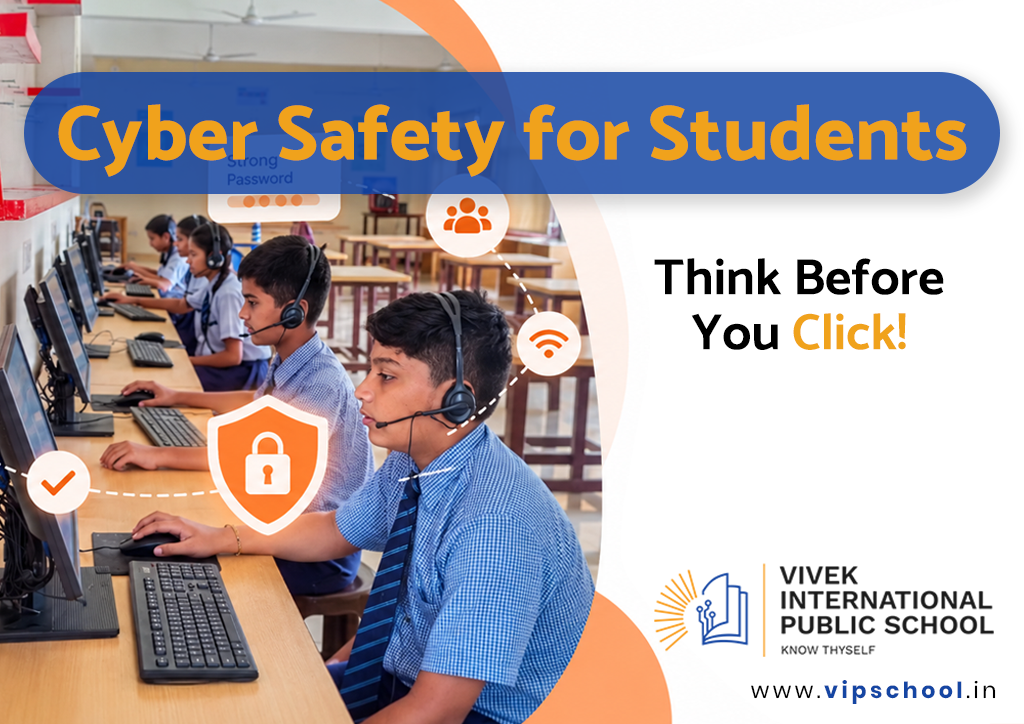 Do you use the internet every day to play games, watch videos, or do your homework? It is fun to use and very helpful when it comes to studying. But it can also be unsafe if we are not careful. Some people online are not kind and may try to trick you or steal your private things. That is why we need to learn about cyber safety.
“Arise, awake, and stop not till the goal is reached.” — Swami Vivekananda
Cyber safety means staying safe when we use the internet. It helps protect you, your private information, and your feelings. This is not only for adults, but for every student, no matter how young or old. If you want to learn more about cyber safety and how it helps keep your personal information private, read this blog till the end.
What is Cyber Safety?
Cyber safety means staying safe when we use the internet. We use the internet on phones, tablets, computers, and game consoles. And cyber safety helps us use all of these in a safe way. Just like you try to stay safe in real life, cyber safety keeps you safe online.
For example, you look both ways before you cross the road. You do not talk to strangers. You do not give your house key to anyone. Cyber safety works in the same way, but it is for the online world. It helps you:
- Keep your private information safe
- Protect your accounts and passwords
- Be kind and respectful to others online
- Feel happy and safe when you are online
- Stay away from people who may try to trick you
Why Cyber Safety Matters for Students
Nowadays, students spend a lot of time online. They use the internet to study, play games, watch videos, and talk to friends. The more time you spend online, the more important it is to stay safe. Here is why cyber safety matters for students:
- Some people online can trick you. Not everyone online is kind or honest.
- Your private information can be stolen and can be used to hurt you.
- Online posts can last a long time, even if you delete them.
- Hurtful words can make you sad, scared, lonely, or upset.
- Viruses can harm your device and steal your personal information.
Essential Online Safety Rules
Staying safe online becomes easy when you know the rules. Here are the seven simple rules every student should follow:
Keep Your Personal Information Private
Personal information is anything that tells people who you are or where to find you. You should keep it safe, just like you keep your house key safe.
Do not share:
- Your full name
- Your home address
- Your phone number
- Your school name
- Your birthday
- Your photos with strangers
Use Strong Passwords
A password is like a lock for your account, and it has to be strong to keep bad people out. To make a strong password:
- Use at least 8 to 12 letters, numbers, and symbols
- Do not use your name or birthday
- Use a different password for each account
- Never share your password, even with your friends
Also Read: How does social media affect a child’s mental health?
Think Before You Post
Once you post something online, it can stay there for a very long time. Even if you delete it, someone may have already saved it. Before you post, ask yourself:
- Could this hurt someone?
- Does it show where I live or study?
- Would I be happy if my parents or teachers saw this?
Do Not Talk to Strangers Online
Not everyone online is who they say they are. A stranger may pretend to be a child or a friend, but they may not be kind.
Remember:
- Do not accept friend requests from people you do not know
- Do not chat with strangers in games or apps
- Never meet an online friend in real life
- If a stranger messages you, tell a trusted adult
Be Careful With Links and Downloads
Some links and files can harm your phone or computer. They may carry viruses or steal your information. You can stay safe by following these tips:
- Ask an adult if you are not sure
- Do not click on strange links or pop-ups
- Do not open emails from people you do not know
- Download apps only from trusted places, like the Play Store or App Store
Be Kind Online
Words online can hurt just like words in real life. So, always be kind and respectful. Be a good internet friend and do not:
- Call people bad names
- Laugh at or share embarrassing photos of others
- Leave anyone out of a group chat on purpose
Always treat others the way you want to be treated.
Also Read: Tips to Manage Distractions in Children
Tell a Trusted Adult
Sometimes, you may see or get something online that feels wrong or scary. This is when you need help. You should tell a parent, teacher, or another adult you trust immediately if:
- You made a mistake online
- Someone asks for your private information
- Someone sends you rude or scary messages
- You see something that makes you feel uncomfortable
On the Final Note
The internet is a great place to learn, play, and make friends. But as a student, you must use it carefully. And to do this, you must be aware of cyber safety rules. For example, you should not talk to strangers online. Be careful with strange links and downloads. Also, you should be kind to others and tell a trusted adult when something feels wrong.
Cyber safety rules are easy to follow, and they work best when we use them every day. When you follow them, you can enjoy the internet without worry. If you want to keep learning such things, excel in academics, and grow in your life, stay tuned to Vivek International Public School, the best CBSE school in Baddi, Himachal Pradesh.