Growth Mindset vs Fixed Mindset: Key Differences
 Have you ever noticed that some people feel excited when they face a challenge, while others try to avoid them? The situation is the same, but not the reactions. This difference is not driven by talent or intelligence, but by the mindset of the person being challenged.
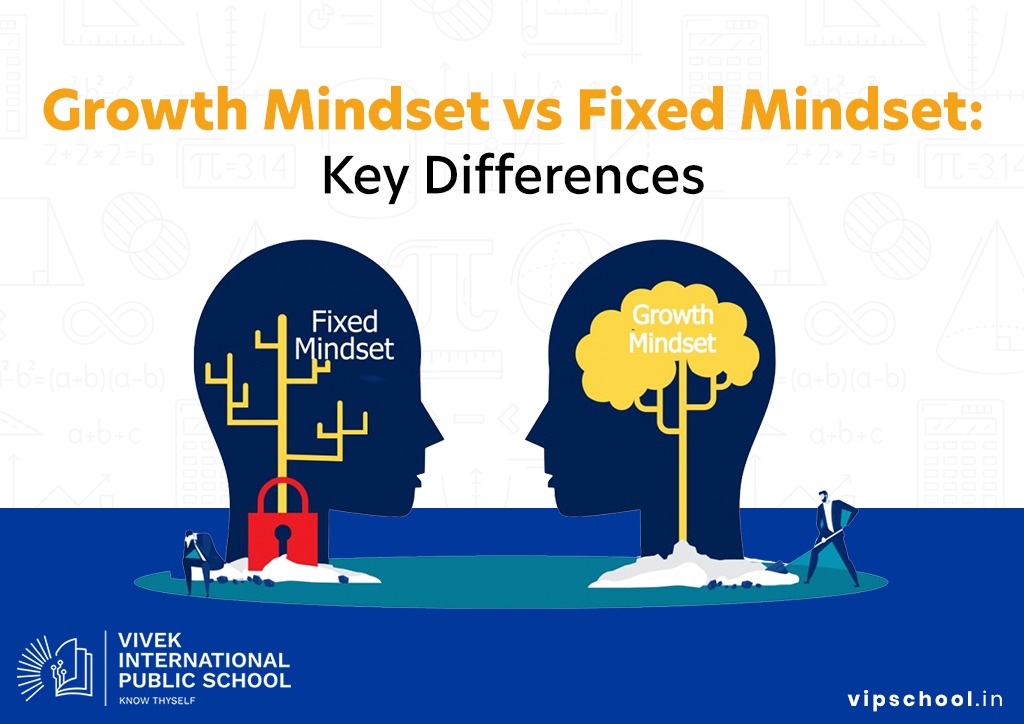
Generally, there are two types of mindsets: a growth mindset and a fixed mindset. Those who possess a growth mindset believe that skills and intelligence can improve with effort. But people with a fixed mindset think that their abilities are fixed and can’t be improved or changed much.
If you want to learn more about the key differences between a growth mindset and a fixed mindset, read this blog by Vivek International Public School, Baddi, Himachal Pradesh, till the end.
Have you ever noticed that some people feel excited when they face a challenge, while others try to avoid them? The situation is the same, but not the reactions. This difference is not driven by talent or intelligence, but by the mindset of the person being challenged.
Generally, there are two types of mindsets: a growth mindset and a fixed mindset. Those who possess a growth mindset believe that skills and intelligence can improve with effort. But people with a fixed mindset think that their abilities are fixed and can’t be improved or changed much.
If you want to learn more about the key differences between a growth mindset and a fixed mindset, read this blog by Vivek International Public School, Baddi, Himachal Pradesh, till the end.
What is a Growth Mindset?
A growth mindset is a type of thinking where you believe that your abilities, like intelligence, skills, and talents, can be improved with effort, practice, and learning. In simple words, a growth mindset is “I can’t do it now, but will be able to do it after learning.”
People with a growth mindset never fear challenges, but see them as an opportunity. Also, if they make a mistake, they do not consider it a failure, but a learning experience. Here are the key traits of a person with a growth mindset:
- Accepts challenges
- Learns from failures
- Considers effort important
- Takes feedback positively
- Always think about improving
Example: If someone finds math difficult, a person with a growth mindset will say: “I am struggling with this right now, but I will improve with practice.” And that’s what makes you more successful and confident in the long term.
What is a Fixed Mindset?
A fixed mindset is a way of thinking where you believe that your abilities, like intelligence, talent, and skills, are already fixed and cannot be changed much. In simple words, a fixed mindset is “Either I am good at this, or not.” And people with such a mindset try to avoid challenges as much as possible.
It is because they think that if they fail, they will be called a failure by the people around them. If they make a mistake while doing something, they give up instead of learning from it and improving later. Here is a list of key traits of a person with a fixed mindset:
- Avoid challenges
- Gives up easily
- Do not value efforts
- Takes criticism personally
- Feels insecure about others’ success
Example: If a person finds public speaking difficult, a person with a fixed mindset will think: “I won’t be able to do it because I am not good at it. Such a mindset limits growth, as such people stop improving and learning new skills.
Impact on Success and Personal Development
The mindset is something that directly affects the growth of an individual, whether it’s their career, studies, or personal life. Here is how different mindsets impact success and personal development:
Growth Mindset:
As mentioned above, people with a growth mindset often see the challenges they face as opportunities. Due to this same reason, they keep learning new skills and improve over time in whatever they do. Instead of stopping them, failures make them strong and independent. As a result, they often get rewarded with better performance, more confidence, and long-term success.
Example: If a person with a growth mindset fails in a project, they will analyze what didn’t go as planned and how they can do better next time.
Fixed Mindset:
People with a fixed mindset like to stay in their comfort zone as long as it is viable. These people avoid challenges and never try new things due to their fear of failure. And that’s what slows down their life and prevents them from reaching their full potential. Such people often get stuck in a place where they can’t grow any further.
Example: If a person with a fixed mindset faces any difficulty, they give up very quickly or try to avoid such situations completely to avoid failure.
How to Develop a Growth Mindset
Developing a growth mindset is a long process, and it cannot happen overnight, but small changes in thinking can make a big difference. Here is more information on how you can develop a growth mindset:
Accept Challenges
Instead of avoiding difficult situations, you should try to accept and handle them effectively. Remember, every challenge you face in your life is a chance to learn something new.
Reframe Failures
Do not think that failures are the end of everything; instead, take them as feedback and see what you can improve next time.
Stop Procrastination
If you are struggling to do something, stop thinking, “I won’t be able to do this.” Instead, say “it is difficult for me now, but it can be improved over time.”
Also Read: 7 Effective Tips on How to Overcome Procrastination!
Take Feedback Positively
Do not get hurt when someone criticizes you; instead, embrace the habit of learning something from the criticism if possible.
Stop Comparing
Always compare your progress with your past, not with someone else. The journey of every individual is quite different.
Keep Learning
Never stop learning to keep growing in your career, academics, and personal life. From books to courses and real-life experience, everything helps you grow.
On the Final Note
In the end, the difference between a growth mindset and a fixed mindset is only how you think, but your mindset can impact your entire life. A growth mindset encourages you to learn, improve, and grow in your life. A fixed mindset, on the other hand, can slow down your growth by giving you doubts about yourself and a fear of challenges.
The good news is that the mindset is not permanent. You can change your thinking consciously with simple steps, such as accepting challenges, learning from failures, and valuing effort. If you are looking for the best CBSE School in Baddi that helps your child develop a growth mindset, contact VIPS, a school that shapes children into confident, curious, and capable individuals.
FAQs
Q. How can I encourage a growth mindset at home with my child?
You can help your child see mistakes as learning opportunities and encourage them to keep trying instead of giving up.
Q. How can I model a growth mindset for my child?
You can show your children how you handle challenges, make mistakes, and learn from them in daily life.
Q. How does VIPS foster a growth mindset in students?
VIPS encourages learning through exploration, practical experiences, constructive feedback, and activities that focus on improvement rather than just grades.
Q. Are these strategies suitable for children of all ages?
Yes, they are suitable for all ages, but should be adapted like simple encouragement for younger kids and deeper reflection for older children.